
On 10th of December each year we commemorate Human Rights Day, a day of recognition for the anniversary of the Universal Declaration of Human Rights (UDHR) being adopted by the United Nations General Assembly. This year the theme is Our Rights, Our Future, Right Now. The hope is that on this Human Rights Day people can acknowledge the importance of human rights and become inspired to join in actions that can lead to a movement to fight for human rights internationally.
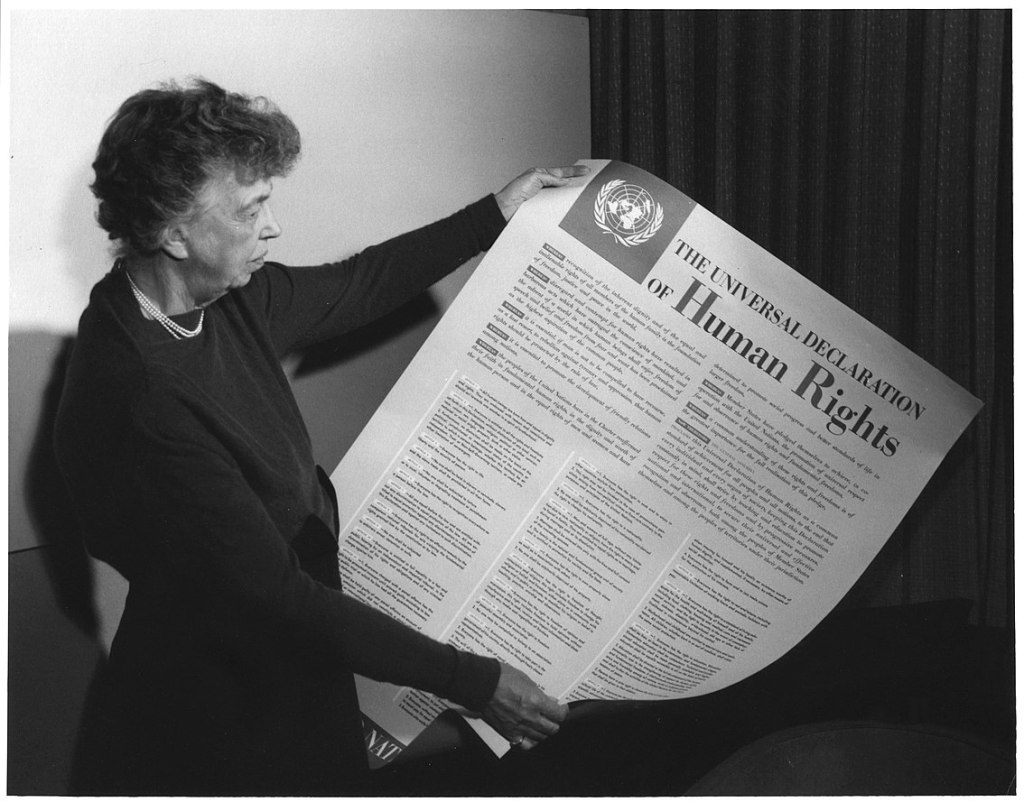
For anyone unaware, the UDHR was drafted by a United Nations Committee chaired by Eleanor Roosevelt, of activist and First Lady fame, and received 48 votes of support (the UK among them). The document set forward a number of human rights including life, liberty, marriage, equal pay and freedom from slavery. Despite being laid out in the document, these rights have not been enjoyed by everyone equally. It would be hard to ignore the current state of the world where war, dictatorships and oppressive laws can make accessing even the most basic of them difficult. As lesbians we are more than aware of our personal fight for equal human rights both in the UK and the fight of lesbians internationally.
Why is the fight for human rights important to us as lesbians?
On a global scale our rights have been challenged through the unfair criminalisation of our relationships and lives. As of today, 64 countries have laws against same-sex activity, 40 of these have additional laws to criminalise sexual activity between women. On top of this there are only 36 countries where we have achieved marriage equality. In the UK, marriage equality was only achieved a decade ago in 2014, civil partnerships were introduced in the Civil Partnership Act a decade before that and the age of consent was equalised just 3 years prior in 2001.
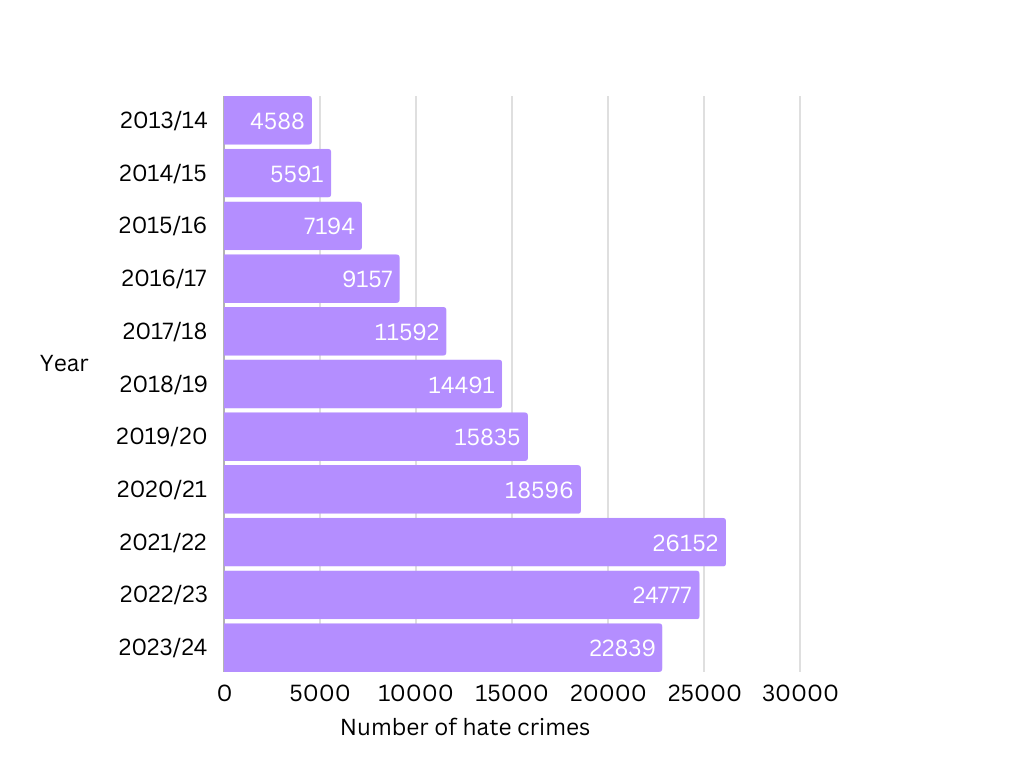
We also face huge amounts of violence. In 2023/2024 there were 22,893 recorded hate crimes based on sexual orientation in the UK – a decrease from the year before but still almost five times higher than 10 years before. Whether this is due to an increase in reporting or an increase in hate crimes matters little when lives are at stake and the overall trend is increasing. These figures also do not account for the numerous times when a crime is not reported or is misreported as being something other than a hate crime. Safety is a human right and yet we are still today facing physical attacks for who we are despite the laws in place that should protect us.
Additionally as women, many of our rights are also very recent and tentatively held. It was only in October this year that protection buffer zones around abortion clinics in the UK were put in place, allowing women better safeguards to access abortions which is a fundamental right of women. It is currently estimated that 40% of women worldwide live in places with restrictive abortion laws, a total of 753 million women. This is alongside the 13 US states with a total abortion ban (only 9 have no limitations). Similarly for other rights, women and girls globally still do not have equal access to education and roughly 12 million girls are married before they reach adulthood. Even for those who do have access technically, misogynistic attitudes can deter them from remaining in education.
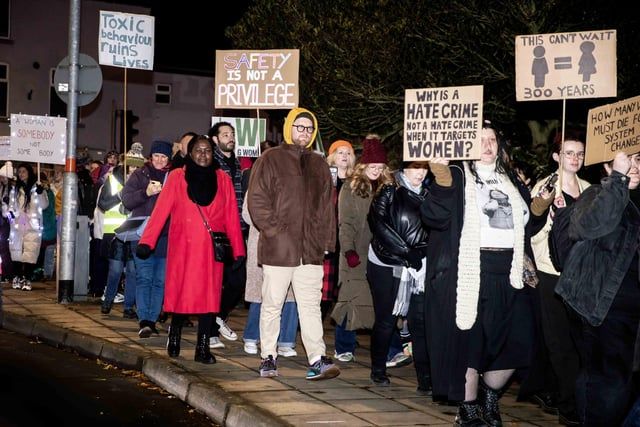
Violence motivated by misogyny is also something that many women unfortunately still have to face. Recently, we attended the Reclaim the Night march (one of many nationally), which began following the instruction to stay inside after dark in the wake of the Yorkshire Ripper murders. Currently 1 in 3 women will experience physical or sexual violence during their lifetime. In 2023, 85,000 women and girls were killed with 60% of murderers being a partner or family member. Violence towards women directly attacks our human rights to life, safety and freedom from discrimination. Despite this, such violence is not considered a hate crime. While the Equality Act 2010 includes provisions against discrimination on the basis of sex, violence against women on the same basis is not counted as a hate crime in statistics.
Beyond our existence as lesbians, it is hard to consider the nature of human rights without being aware of the global atrocities currently being committed – many of which will have a knock-on effect on women and lesbians without targeting them specifically. In a report released in January, UN Women stated that 70% of civilians killed in Gaza were women or children with 2 mothers being killed every hour. This is just one part of the world facing such wide scale death, Sudan and Ukraine are just two examples of countries currently dealing with war. Often mothers will put their families first in crisis situations which combined with a lack of access to maternal healthcare or clean water and menstrual supplies can increase the death rate for women dramatically. It is absolutely vital therefore that we do not become complacent in our opposition to challenging regimes or politicians who would begin the removal of rights or support the invasion of countries, invasions which always result in the loss of innocent life.
On the whole this can feel very pessimistic and off putting. If things are still so grim, why do we continue to fight? Well, simply because things will not get better if we do not. It is important to uplift each other and protect each other against those who would take our rights away, to stand in solidarity with other groups so that they might stand in solidarity with us. Human rights are everyone’s problem and if we do not stand strong against legislature and bigoted attitudes, we risk losing what we have gained. A disservice to ourselves, those who got us these human rights and those who are still yet to come in the future. We need to ask ourselves what we can do in our everyday lives to help support others to access the same basic rights that we enjoy as well as being vocal opponents to anyone who would stand against us.
So what can we as individuals do to maintain the fight for human rights?
An easy place to start is by making yourself aware of your own human rights. Human rights are not just a concept important for others, but also for yourself as a human being. We each as individuals have rights even if we are not aware of they mean. The 30 rights of the UDHR can be found listed places like Amnesty International or the United Nations website (links at the end for anyone interested). Once you know your rights, you can be more aware of when they are being challenged and be in a better position to stand your ground against pushes to remove them. It’s always a great idea to involve yourself locally in organisations that run events and provide material for groups who are most at risk, through them you can find out about rallies or marches that can create wider visibility and put pressure on governments to listen to the people. This can also allow you to connect with others in your community, and larger groups can be stronger when challenging unfair systems than individuals alone.
At NLS we try to support as many causes we believe in as we possibly can, whether it be marches like Reclaim the Night or causes like Palestine solidarity, and we hope that it shows through our work. Anyone who has seen our physical material or chatted to us in person knows how vocal we are about the rights of lesbians (and women generally) but also how willing we are to educate ourselves and fight for the rights of other groups. While today we may be marking Human Rights Day, we are committed to keeping this energy throughout the year and into 2025!
Futher Reading:
https://www.amnesty.org/en/what-we-do/universal-declaration-of-human-rights/
https://www.un.org/en/about-us/universal-declaration-of-human-rights
https://www.ohchr.org/en/about-us/human-rights-day
https://www.unwomen.org/en/news/in-focus/end-violence-against-women/2014/rights

 Northants Lesbian Society
Leave a comment